

Interview with Dan Kuroda and Sajli Belqiri Founders of Worqlo
Where business insight meets technical excellence
-
Experience
Entrepreneur, Product Visionary Worqlo
-
Industries
Enterprise, CRM, Workflow, AI
-
Notable Achievements
AI-driven workflows, CRM integrations, real-time automation
-
AI Capabilities
Conversational interface, Decision automation,
Predictive insights
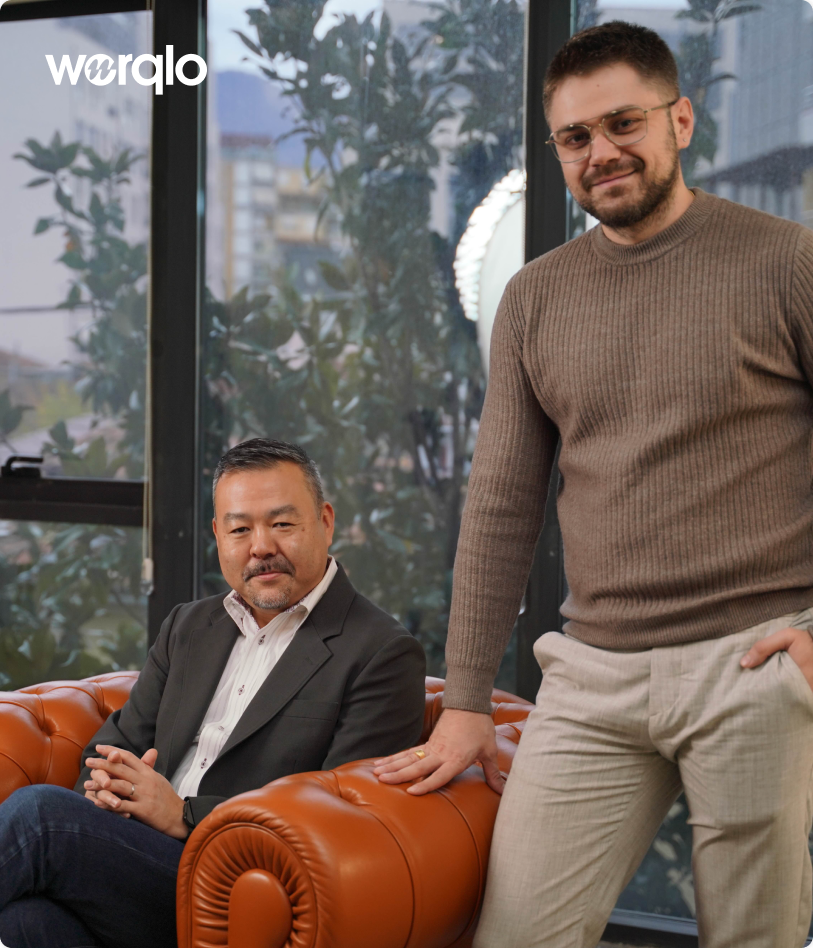
Worqlo is built on more than a decade of close collaboration between two experienced leaders, Dan and Sajli, whose combined expertise spans enterprise operations, product strategy, and large-scale system design.
Dan brings extensive experience as an entrepreneur, operator, and executive, with a track record of building, restructuring, and scaling technology-driven businesses. He currently serves as CEO of FIIT B.V. and holds executive leadership roles across several organizations, including Wyn Enterprise. His work focuses on turning complex, underperforming products into stable, scalable platforms, with experience operating across the US, Europe, Asia, and the Middle East. This background informs Worqlo’s emphasis on operational reliability, governance, and long-term sustainability.
Sajli is Co-Founder and Chief Product Officer at Worqlo, responsible for product architecture, system integrations, and execution. He has deep expertise in enterprise software development, workflow orchestration, and connecting fragmented business systems. Sajli leads the design of Worqlo’s deterministic workflows, security model, and conversational interface, ensuring the platform delivers consistent outcomes while meeting enterprise requirements for control, auditability, and scale.
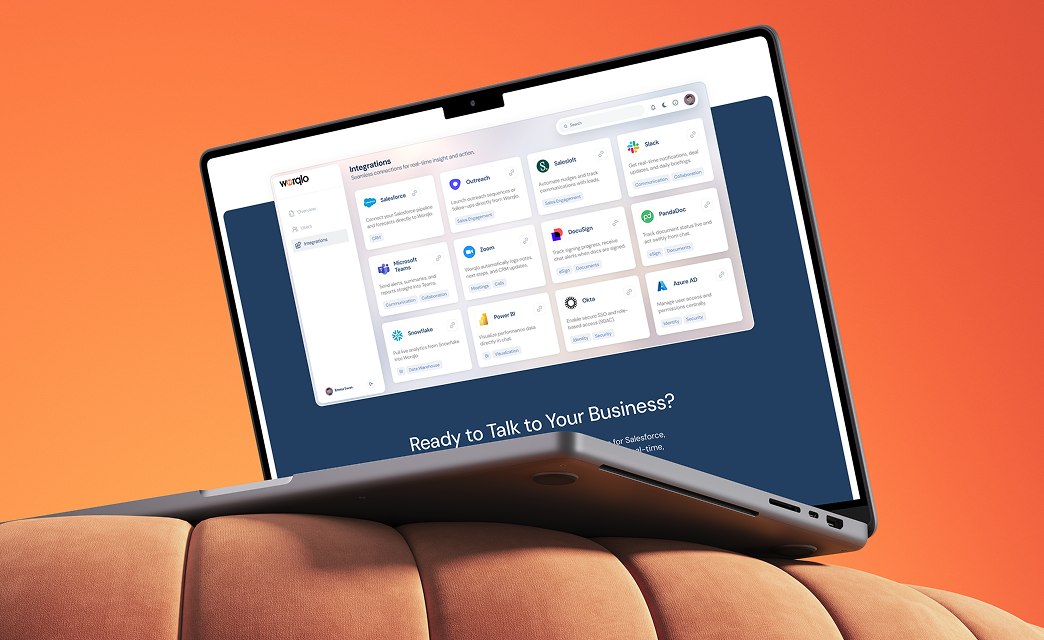
Worqlo connects directly to enterprise systems such as CRMs and enables leaders to see, decide, and act within a single conversational interface. Executives can monitor performance, manage teams, and trigger actions without switching tools. Deterministic execution, role-based access control, and full audit trails ensure every action is governed, traceable, and compliant. Where traditional dashboards provide visibility, Worqlo enables execution.
Together, Dan and Sajli combine operational leadership with deep technical execution. Worqlo is designed for enterprises that need to reduce coordination overhead, accelerate decision-making, and deploy AI as dependable infrastructure, not an experimental layer.
The Product Vision Behind Worqlo
AD: Dan, You’ve worked with complex products and organizations across multiple regions and industries. What recurring problem did you see in how leaders interact with data and systems, and how did that insight lead to Worqlo?
DK: Over the years, working with companies across the US, Asia, Europe, and the Middle East, I kept seeing the same pattern: leaders were drowning in systems, dashboards, and reports yet still making critical decisions based on partial information or delayed insights. Data was everywhere, but clarity and action were missing. Worqlo was born from this frustration. We wanted to give leaders a way to interact with their business as a living system not through static reports, but through real-time conversations that lead directly to action.
AD: Dashboards are everywhere, yet leaders still struggle to act quickly and confidently. What do you believe traditional BI and reporting tools fundamentally get wrong?
DK: Traditional BI tools are built to show information, not to move a business forward. Dashboards assume that once you see the data, you’ll know what to do next but in reality, that’s where friction begins. Leaders still have to jump between systems, ask teams for clarification, and manually trigger actions. Worqlo closes that gap. It doesn’t just show what’s happening, it enables leaders to act instantly, with confidence, directly from the insight itself.
“Clarity in leadership comes from action, when insight and execution meet, businesses move with confidence.”
AD: Worqlo promises “see, decide, and act in one chat.” Why is action not just visibility the missing link in modern enterprise decision-making?
DK: Action is the real currency of leadership. Visibility without execution creates a false sense of control. Worqlo’s “see, decide, and act” approach ensures that insight and execution happen in the same moment. You can ask a question about your pipeline, understand the situation, and immediately trigger the next step — whether that’s assigning a task, updating a workflow, or automating a process. That’s how speed and confidence are built into decision-making.

Product Architecture & Agentic AI
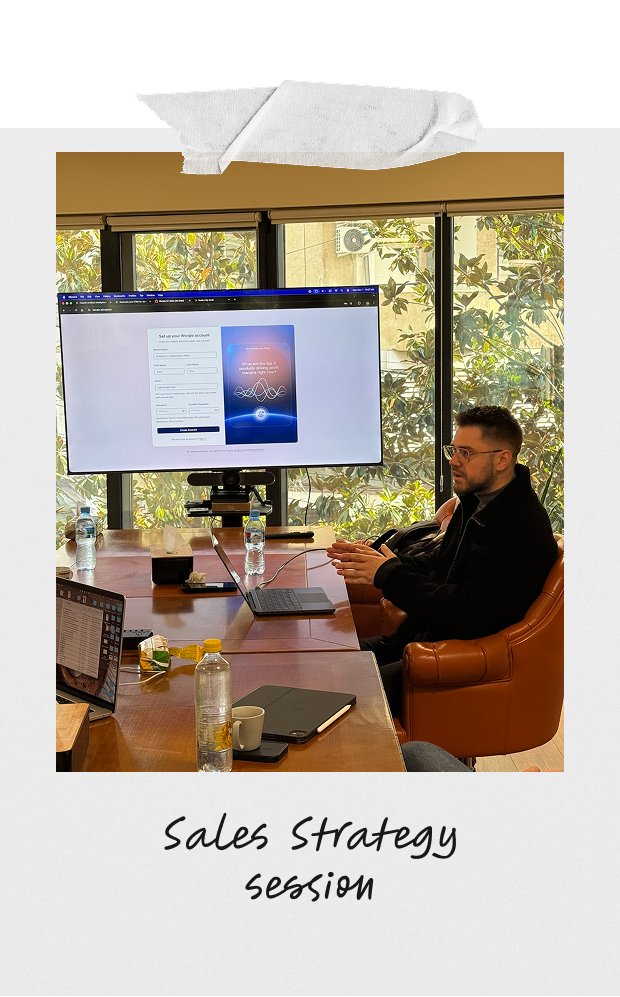
AD: Sajli, Worqlo connects CRMs, workflows, and enterprise systems into a single AI-driven interface. From a product and architecture perspective, what was the hardest complexity to solve?
SB: The biggest challenge was not connecting systems, integrations exist everywhere, but creating a coherent experience on top of them. Enterprises run on fragmented workflows, legacy systems, and inconsistent data structures. Our goal was to abstract all that complexity and present it as a single, intelligent interface. Worqlo translates messy, multi-system processes into a deterministic, AI-driven layer where leaders can interact with their business naturally and reliably.
AD: Agentic AI is becoming a buzzword. How does Worqlo ensure trust, traceability, and control especially in regulated environments?
SB: Agentic AI often sounds abstract, but for us it’s very concrete. Worqlo’s reasoning engine plans, executes, and adapts actions within clearly defined boundaries. Deterministic workflows ensure that every action follows explicit rules, while audit trails make every decision traceable. This is critical for regulated industries — AI must be powerful, but it must also be predictable, explainable, and secure. Trust is not optional at the enterprise level.
“Enterprise AI must be intelligent, predictable, and accountable anything less can’t scale”
AD: How do security, governance, and auditability shape the way enterprises can safely adopt AI?
SB: Security, governance, and auditability aren’t layers you add later. They determine whether AI can move beyond pilots. From day one, we designed Worqlo to operate within enterprise constraints, including ISO and SOC 2 standards, GDPR alignment, and clear execution boundaries.
Audit trails, role-based access, and deterministic workflows ensure every action is traceable and intentional. In parallel, we’re testing deployment paths on in-house infrastructure, including NVIDIA DGX Spark, to validate how AI systems can run reliably, cost-efficiently, and within strict security boundaries. That combination is what allows enterprises to scale AI safely, not as an experiment, but as infrastructure leaders can trust.
Enterprise Impact, Trust & Scale
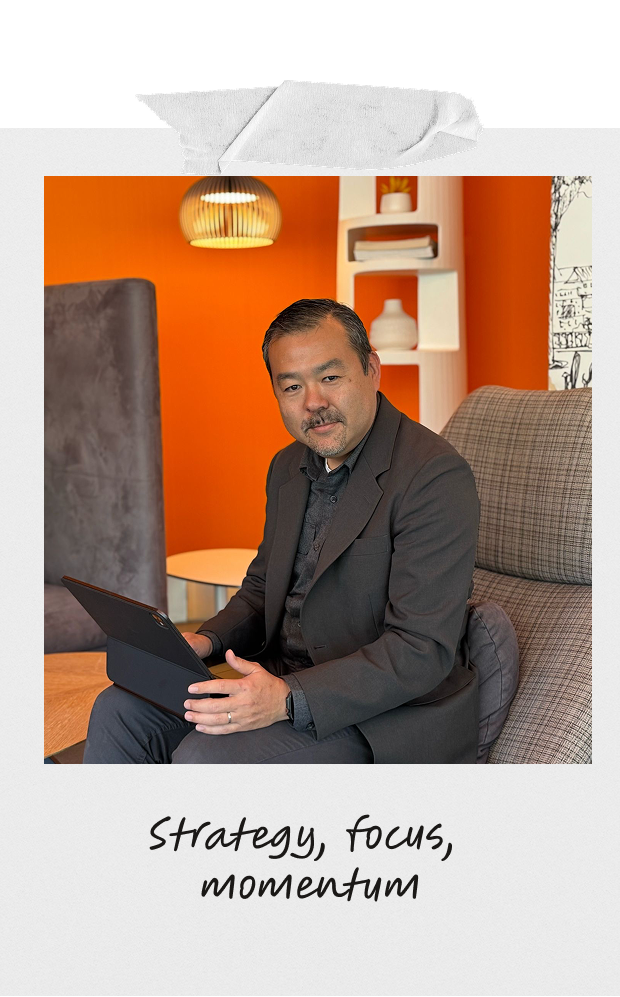
AD: Worqlo is deployed across software development, financial services, manufacturing, and enterprise SaaS. What patterns do you see in how high-performing leaders use AI differently?
DK: High-performing leaders don’t treat AI as a reporting layer or a novelty. They use it as an operational partner. The most effective leaders focus on shortening the distance between insight and execution. Worqlo becomes the place where strategy meets daily operations — enabling leaders to respond to changes in real time instead of reacting after the fact.
AD: How do you balance rapid innovation with the security expectations of global enterprises?
SB: Balancing innovation and security is a constant discipline. Our approach is simple: move fast, but never at the expense of trust. Enterprise customers expect AI systems to be transparent, controllable, and compliant by default. By embedding governance and security deeply into the platform, we allow organizations to innovate confidently — knowing that every action is traceable and every decision is accountable.
“Real transformation happens when insight, action, and trust work as one.”
AD: Looking ahead, how do you see Worqlo changing the way C-level executives and founders run complex businesses?
DK: We believe Worqlo will fundamentally change how leaders manage complexity. Instead of running businesses through layers of tools, meetings, and reports, executives will manage through intent. You ask, the system understands context, executes safely, and adapts as the business evolves. That shift — from managing systems to directing outcomes — is where the future of leadership is headed.

Get Your Free Website Audit
Discover ways to increase your traffic, improve user experience, and get more conversions!

Thank you for reaching out!
Our team is already on it. you’ll receive your actionable insights shortly.
Close & Continue